1Free9 steps
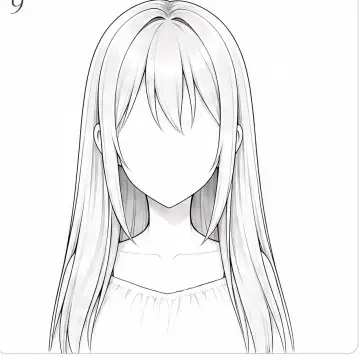
Long straight hair
The simplest hairstyle is the best place to learn what applies to all of them: where hair starts, how much volume it has, and how it groups into locks. Get this right and the other seven are variations.
Course
The challenges run in order, from the first stroke to the finished drawing. Each one comes with a plate per step, and graded feedback once you send your drawing.
10 challenges
The simplest hairstyle is the best place to learn what applies to all of them: where hair starts, how much volume it has, and how it groups into locks. Get this right and the other seven are variations.
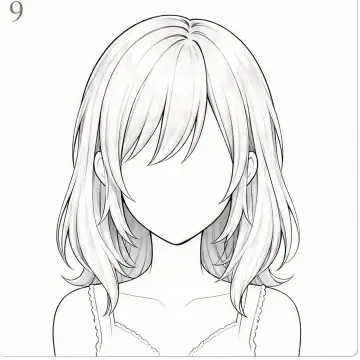
One length is easy to read; three at once isn't. Here you learn to stagger: layers that end at different heights and stack over one another without turning into a tangle.
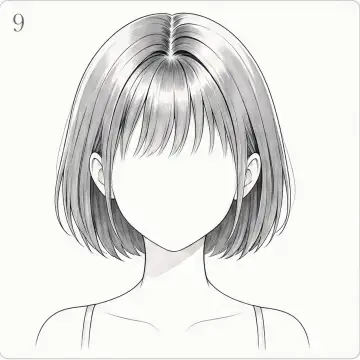
Short hair is unforgiving: there's no length to hide the head, so the shape of the skull and the line of the cut are on full display. Here the silhouette is everything.
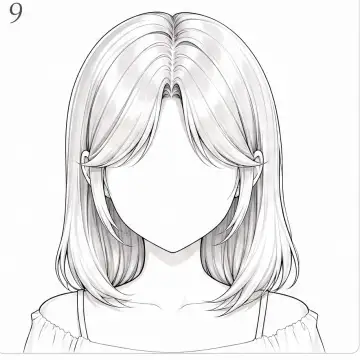
The fringe changes an expression more than any other part of the hair, and it's the only part that starts from its own point, separate from the rest. Here you pick the type, set the cut height, and watch the character change with it.
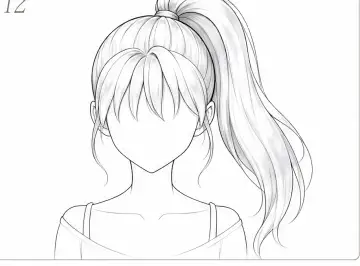
This is the first hairstyle where the hair is tied up: there's a tie point, and the whole style pulls toward it. What you learn here is the difference between hair held tight before the elastic and hair falling loose after it.
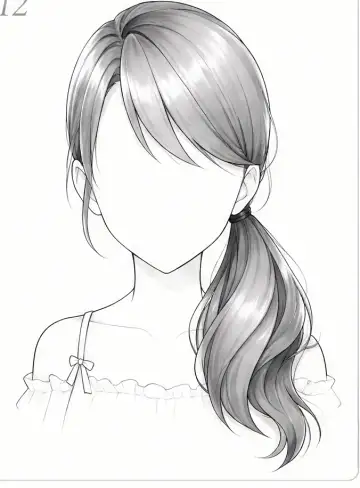
The same ponytail moved to one side, and with it a new problem: asymmetry. One side ends up full, the other bare, and all the weight drops to a single side. The hard part isn't drawing it — it's making it read as a decision instead of a mistake.
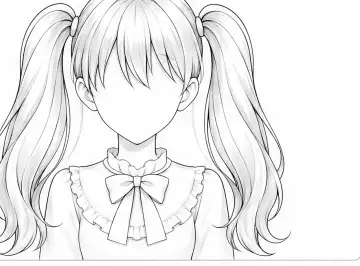
Two equal masses, one on each side, and nowhere to hide a mistake. Symmetry stops being a detail here: if one tail sits higher or weighs more than the other, everyone sees it. The way through is to solve one side properly and mirror it on purpose — never to redraw it from memory.
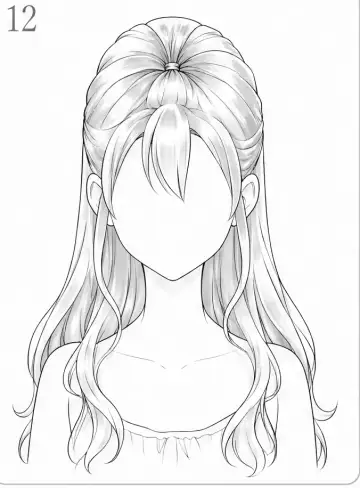
Half the head gathered, half of it loose: two different behaviours living in the same hair. Tension rules on top, gravity rules below. The hard part isn't drawing either zone — it's making the difference read without it looking like two hairstyles stuck together.
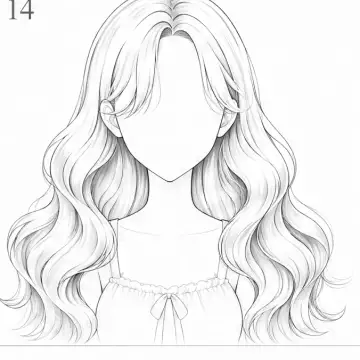
A wave isn't a wobbly line: it's an S-curve repeating on a rhythm. The hard part isn't drawing one S, it's drawing eight in a row without them turning into a spring. Here you build the rhythm first, then break it on purpose.
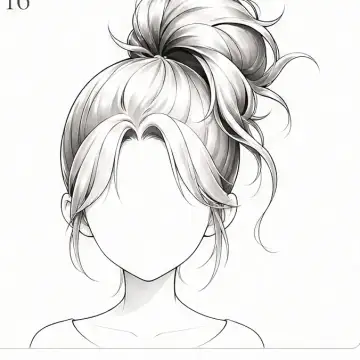
The last one in the course, and the only one where mess is the technique. A messy bun isn't a badly made bun: it's a well-built bun you deliberately take apart, with judgement. This one also finishes in ink, so every line you keep is final.
The other steps, the voice that walks you through them, and the feedback on your drawing are inside the app. Creating the account is free and asks for no card.
An AI compares your drawing with the plate and tells you what to fix. It is not a person looking at your sketchbook.